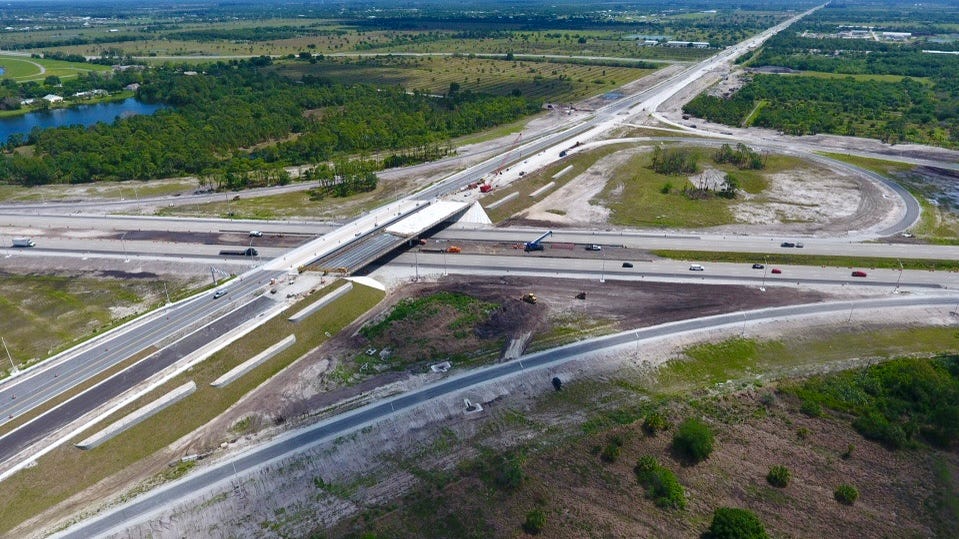
South County's 3,000-Home Building Boom
For years, the sprawling parcels west of Indian River Boulevard sat largely quiet — approved on paper, stalled in practice. That's changing fast. The South County development corridor, anchored by the long-awaited Oslo Road/I-95 interchange, is now the most active construction zone in Indian River County, with multiple master-planned subdivisions breaking ground in sequence. What makes this different from a typical suburban buildout is the interconnected design: these aren't isolated pocket communities but a coordinated network of neighborhoods sharing road infrastructure, stormwater systems, and in some cases amenity access. For buyers, that means the early entrants are pricing into a neighborhood that will look and feel materially different in three to five years — which cuts both ways.
On the upside, ground-floor pricing in these communities is historically where the value gets captured. Builders in the corridor are currently offering base pricing that reflects raw land costs and pre-completion incentives, but comps will shift quickly as the interchange fully opens and commute times to the Treasure Coast's employment centers compress. The Oslo Road connection to I-95 isn't just a convenience — it's a structural change to how this part of the county connects to the broader region, making it genuinely competitive with established corridors in St. Lucie County for buyers who work north toward Melbourne or south toward Palm Beach. That's a different buyer pool than Vero Beach has traditionally attracted in its western communities, and increased demand from that group tends to firm up resale values.
The risk side deserves equal attention. Seven subdivisions absorbing thousands of households over a compressed timeline means resale inventory could be crowded for years — anyone buying new here and needing to sell within three to five years may find themselves competing against builder inventory and a wave of early buyers all selling simultaneously. Buyers should also scrutinize the CDD (Community Development District) structures common in these developments, since the debt levied to fund infrastructure gets passed to homeowners through annual assessments that persist long after the community is built out. Understanding the total cost of ownership — not just the mortgage — is especially important here, where the headline price can look attractive against barrier island alternatives but the carrying costs narrow that gap considerably.